Is Joint Cracking Harmful?
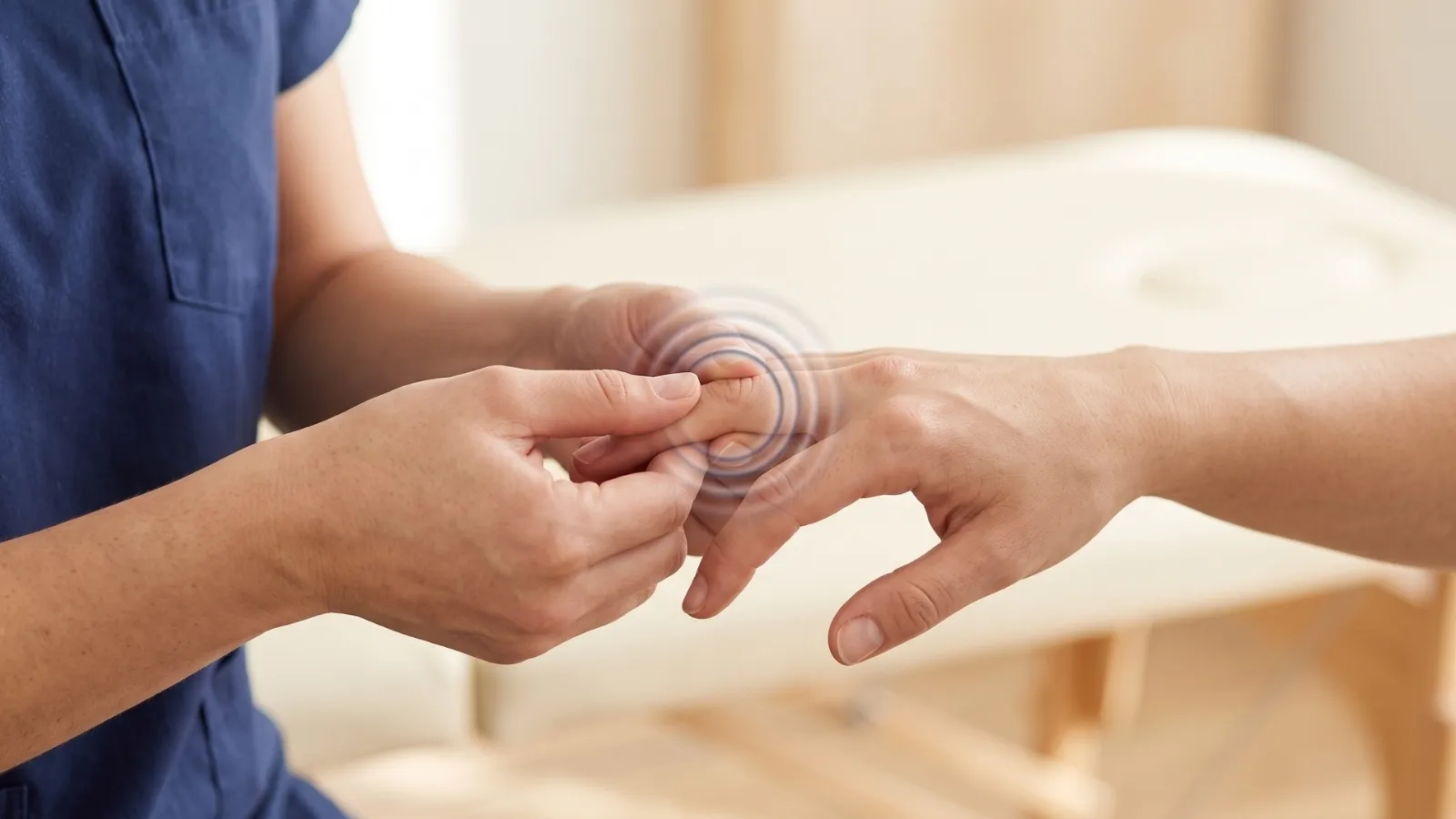
Cracking your knuckles, or twisting your neck or back to produce a “crack”, is a very common habit. Many people have heard that it damages the joints, or even leads to arthritis over time. Whether that is actually true — what joint cracking really is, and when it is harmless versus a sign worth paying attention to — is often different from what people assume.
What Is That “Crack” Really?
The sound in joint cracking is not bones rubbing together or “clicking back into place”. Inside a joint there is a fluid that lubricates it. When the joint is stretched quickly, the pressure in this fluid drops suddenly and a small gas bubble forms; the “crack” you hear is related to this. Imaging studies have shown this happening in real time.
The practical meaning is this: the sound is not proof that something has been “fixed” or has “gone back into place”. It is also why a joint cannot be cracked again for a while after it has just been cracked — the gas bubble takes time to re-form.
Does Cracking Your Knuckles Cause Arthritis?
This is the most common fear. The current scientific evidence does not show that cracking your knuckles leads to arthritis of the hand joints. One of the most widely known examples is the observation of a doctor who, for decades, regularly cracked the knuckles of only one hand and then compared both hands; no difference in arthritis was found between them. Larger studies have likewise found no meaningful link between knuckle cracking and hand arthritis.
So cracking your knuckles as a habit is not the joint-wearing danger it is feared to be. (Very rarely, some studies have reported temporary swelling after excessive, forceful cracking; but that is not the same as arthritis.)
What About Cracking Your Own Neck and Back?
Here it is worth being a little more careful. The knuckle joints are small and simple; the neck and back, on the other hand, are far more complex regions through which important nerves and blood vessels pass. An occasional “crack” from a natural movement is usually harmless. But the habit of repeatedly, forcefully and abruptly twisting your neck or back to relieve tension is a different matter.
There are two sides to this. First, though very rarely, extreme and uncontrolled forcing of the neck can carry serious risks. Second, and more importantly: a constant need to crack is often not a solution but a sign. The relief it brings usually lasts a few minutes and the tension returns — because the underlying restriction in movement or muscle imbalance is not removed by cracking.
The “It Feels Better When I Crack It” Sensation
So why does cracking feel good? When a joint is stretched, the nerve endings in its capsule are stimulated, and this signal to the brain lets the muscles around the area relax for a moment — producing a brief sense of relief and lightness. The body’s own natural relaxing chemicals may also play a part.
There is an important distinction here. Cracking the same area yourself, repeatedly and out of habit, usually brings only temporary relief and does not address the underlying problem — if the relief only ever comes with cracking, the real cause is still there.
The real difference emerges when manipulation is used therapeutically, as part of a whole. A physiotherapist may use it when appropriate; but not on its own — it is handled alongside other manual therapy techniques (work directed at the joints and soft tissues) and supported by suitable therapeutic exercise. Because what makes the difference is not a single movement, but the holistic treatment approach behind it. What manual therapy is, and why this technique is only a small part of the whole, is covered in a separate article.
When Should You Seek an Assessment?
There is no need to worry about the occasional joint crack. However, it is sensible to see a physiotherapist in these situations: if the cracking is accompanied by pain, if you feel a constant need to crack a particular joint, or if the cracking comes together with stiffness and tension in an area. These are often a sign not of the cracking itself, but of an underlying movement problem — one that can be addressed with a proper assessment.
References
- Kawchuk GN, et al. Real-time visualization of joint cavitation. PLoS One. 2015.
- Unger DL. Does knuckle cracking lead to arthritis of the fingers? Arthritis Rheum. 1998.
- Deweber K, et al. Knuckle cracking and hand osteoarthritis. J Am Board Fam Med. 2011.
Frequently Asked Questions
Does cracking your knuckles cause arthritis?
Current scientific evidence does not support this; no meaningful link has been shown between knuckle cracking and hand arthritis.
Is it risky to crack my own neck?
An occasional crack from natural movement is usually harmless; but a habit of forceful, repeated cracking is not advised and is often a sign of an underlying issue.
It feels better when I crack it — why does the tension come back?
The relief is real but temporary; cracking does not resolve the underlying movement restriction. If you constantly need to, an assessment is sensible.
You can book an appointment to assess your condition and discuss suitable treatment options.
Related Posts

How to Sleep with Back and Neck Pain? Mattress, Pillow and Position
How should you sleep with back and neck pain? An evidence-based, honest physiotherapist's guide to mattress, pillow and sleep position.

Is Manual Therapy Suitable for Everyone? When Is It Not Applied?
Is manual therapy suitable for everyone? The contraindications, red flags and how the decision on suitability is made — through assessment.
Is Manual Therapy the Same as Chiropractic?
Is manual therapy the same as chiropractic? The difference in scope, what the 'crack' sound really is, and why one technique is not a treatment.
This content is for informational purposes only. It is not intended as medical advice. Please consult your physician and physiotherapist for any health concerns.